
Rainbow Sheet Cake with Cream Cheese Frosting
This super fun rainbow sheet cake is easier to make than it looks! It features a “reverse creaming” method which is a short cut technique where you mix the dry ingredients like flour with the butter, then add the liquid like buttermilk and eggs. The result is a velvety tight crumb on the cake that is soft and tender. Be sure not swirl and marble the different colored cake batter too much. You want a light touch, not mixing it together too much for the batters to blend in. The result is a patchwork tie-dye affect with the cake slices that is just as delightful to the eye as it is to the palate.
Servings 24
Calories 391kcal
Ingredients
Cake Batter
- 2 1/2 cups all-purpose flour 350 g
- 2 tablespoons cornstarch
- 1 3/4 cups white sugar
- 1 teaspoon baking powder
- 1/2 teaspoon baking soda
- 1 cup butter at room temperature 225 g or 2 sticks
- 1 tablespoon vanilla extract
- 1 1/3 cups buttermilk well shaken
- 3 large eggs
To decorate
- food coloring
- Cream cheese frosting
- 8 ounces cream cheese softened
- 1/2 cup butter softened, 115 g or 1 stick
- 3 cups powdered sugar sifted, 345 g
- 2 teaspoon vanilla extract
- 1/4 teaspoon kosher salt
To decorate
- Rainbow sprinkles
Instructions
- Preheat an oven to 350°F. Lightly coat a 9 x 13 x 2-inches baking pan with cooking oil, then line it with parchment paper.Make the cake batter by first placing the flour, cornstarch, sugar, baking powder, and baking soda in the bowl of a stand mixer. Whisk together to blend.

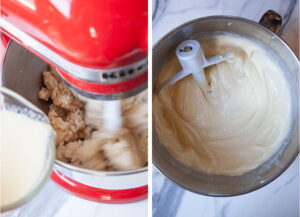
- Cut up the butter and place it in the bowl, along with the vanilla extract. With the paddle attachment, mix the ingredients together, until the butter has completely broken down and incorporated, creating a crumbly texture that looks like wet or damp sand.

- Beat together the buttermilk and eggs in a glass measuring cup.

- With the mixer turned on to low speed, drizzle the liquid slowly into the bowl. Stop and scrape down the sides of the bowl once or twice, to make sure the entire batter is completely mixed together.
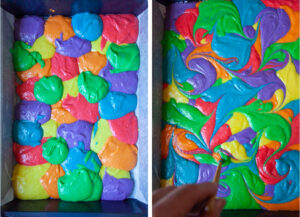
- Divide the batter into 6 different bowls, about 1 cup per bowl, or about 220 grams of batter if you have a scale. Add yellow, orange, red, purple, blue, and green food coloring to each of the bowls and mix together thoroughly to form 6 different colored batters.

- Now spoon the colored batter into the prepared pan, evenly distributing the batter all over, making sure to alternate color spoonfuls of the batter all over. Take a chopstick or butter knife and carefully swirl the batter decoratively (do not swirl too much). Gently tap the pan on the counter, to help settle the batter and remove any air pockets.Bake 30 to 35 minutes, or until a toothpick inserted in the middle of the cake comes out clean. Let cool completely in the pan.
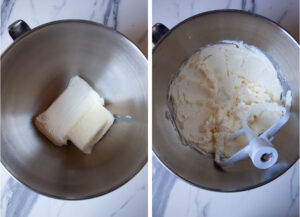
- Once the cake has cooled completely, make the cream cheese frosting by placing softened cream cheese and butter into the bowl of a stand mixer fitted with the paddle attachment. Cream the two ingredients together, until well-blended. See note below about softening both ingredients.
- Add the vanilla and salt, then sift in 1 cup of powdered sugar (see note below on why it’s important to sift in the powdered sugar). Mix together, until the dry ingredients are incorporated. Sift the other 2 cups of powdered sugar, one at a time, making sure to scrape down the bottom and sides of the bowl between additions. If the frosting is too loose, you can add an additional 4 to 8 tablespoons of powdered sugar, a tablespoon at a time, until it has thickened to a spreadable consistency. Or cover and place the bowl in the refrigerator for 30 to 60 minutes, to help stiffen it. Note: It’s important you sift the powdered sugar. See note below for the reason why.

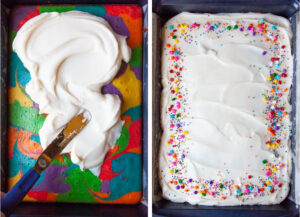
- Frost the top of the cake, and then add decorative sprinkles on top before serving!
Notes
- Buttermilk: I use buttermilk in this recipe but if you don’t have buttermilk, I have a section above on substitutions for buttermilk using more common ingredients.
- Food Coloring: I don’t list the amount of food coloring needed because different food color has different strengths. If you have liquid food coloring (the kind you get from a grocery store, that come in the tear drop shaped bottles) you’ll have to add more. If you have thicker gel coloring or professional food coloring, it will be more intense, so less food coloring will be needed. It’s always best to start with a few drops of color regardless of the type of food coloring you have, mix it in, and then add more to darken the batter if you need to.
- Soften Cream Cheese and Butter: Be sure to use softened cream cheese and butter, or the frosting will be lumpy. The best way to soften them is to place them on the counter or kitchen table when you cake has baked. By the time it has cooled completely, the cream cheese and butter should have been brought to room temperature. But I have a section above on how to quickly soften cream cheese and butter if you forget to do this, or if you are in a hurry.
- Sift Powdered Sugar: Be sure to sift in the powdered sugar. Because powdered sugar is ground so fine, it is hygroscopic, and will absorb the ambient water in the air, clumping together. Clumpy powdered sugar won’t properly dissolve in the frosting, no matter how much you mix it. So, it’s important you sift the powdered sugar into the frosting, or you’ll end up with lumpy frosting.
Nutrition
Calories: 391kcal | Carbohydrates: 41.1g | Protein: 5.4g | Fat: 18.1g | Saturated Fat: 11g | Cholesterol: 97mg | Sodium: 1137mg | Potassium: 530mg | Fiber: 0.4g | Sugar: 22.6g | Calcium: 226mg | Iron: 2mg